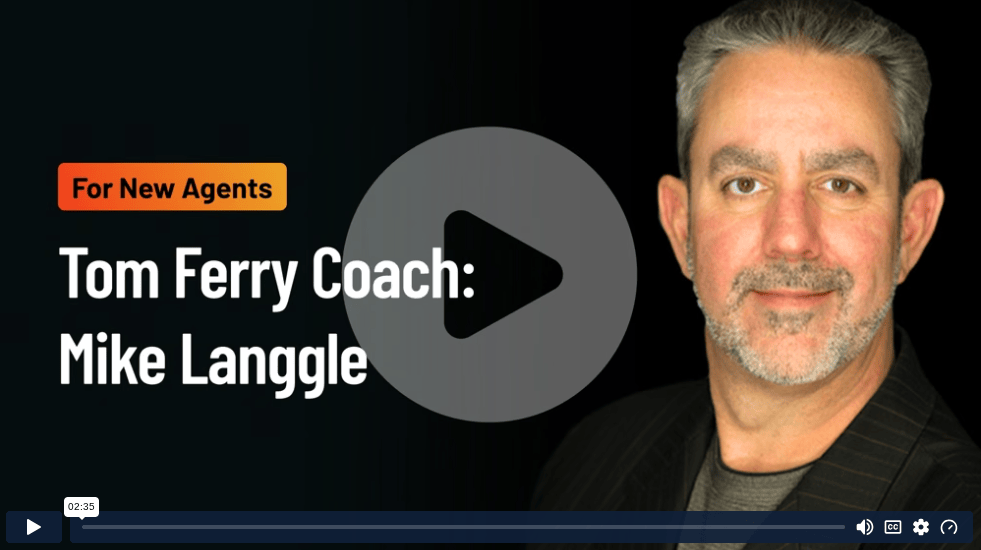
By Coach Mike Langgle, Designated Mastery Business Coach | Team Langgle Coaching
VIDEO: The #1 Mistake New Real Estate Agents Make
You passed the exam, hung your license, and told everyone you know. You’re making calls, knocking doors, and showing up at every open house you can find. Then it works. You land your first buyer, maybe a listing, and suddenly you’re busy.
That’s exactly where most new real estate agents make the mistake that shapes the rest of their career.
I got into real estate in 2000. In 2010, my team hired our first business coach. I started coaching in 2021, and in 2023 I retired from production to coach full time. Over all of those years, the most consistent mistake I’ve seen new agents make isn’t a bad script or a weak listing presentation. It’s inconsistent prospecting.
The numbers show how common the struggle is. According to NAR’s 2026 Member Profile, Realtors with two years or less of experience earned a median of just $8,000 from real estate in 2025, while the typical Realtor completed nine transaction sides. HousingWire’s coverage of the same report put newer agents at a median of two.
Here’s why that gap opens up, and the simple fix that closes it.
The #1 Mistake New Real Estate Agents Make: Prospecting Only When They’re Empty
When you’re brand new, you have no business, so you prospect like crazy. You call your sphere, you follow up with everyone you’ve met, you take every lead you can get. It’s exhausting, but it works.
Then you get a buyer. Maybe two. Maybe a listing. And all your attention shifts to them. You’re writing offers, coordinating inspections, answering texts at 9 p.m. You’re busy, and busy feels like success.
But here’s what quietly stops: the prospecting.
Nobody decides to stop. It just slides. “I’ll make my calls after this showing.” “I’ll catch up on follow-up once this one closes.” The days fill up with today’s business, and nobody is building next month’s.
That’s not a discipline problem as much as a design problem. New agents tend to treat prospecting as something you do when you have time, and when you’re busy with clients, you never have time.
Takeaway: The mistake isn’t failing to prospect. It’s prospecting only when you have no business, then stopping the moment you do.
How the Real Estate Roller Coaster Works
Here’s what happens next. Those first deals close. You look up and realize your pipeline is empty. So you go back to prospecting, hard, starting over from zero.
And that restart isn’t instant. It can take another six to eight weeks to find your next group of buyers or sellers, and longer before those turn into paychecks.
So the cycle repeats:
- No business → prospect hard
- Business arrives → stop prospecting to serve it
- Deals close → no business again
- Back to prospecting → wait weeks for results
That’s the real estate roller coaster. The highs feel great. The lows are stressful, unpredictable, and expensive. And many new agents ride it for years without realizing they built it themselves.
The roller coaster also explains why early-career income looks the way it does. When your business comes in waves, your income comes in waves, and the gaps between them can swallow a year.
Takeaway: If your business arrives in bursts followed by droughts, it’s not the market. It’s the gap in your prospecting showing up six to eight weeks later.
The Fix: An Appointment With Your Future Self
The way off the roller coaster is the second mistake I see new agents make, fixed: set a schedule and stick to it.
That means putting prospecting on your calendar as an appointment. Not a to-do. Not a “when I get to it.” A real appointment, with a start time and an end time, just like a listing appointment.
I call it an appointment with your future self. It’s your meeting with the version of you who will have business three, six, and nine months from now. Every time you keep it, you’re feeding that person’s pipeline. Every time you skip it, you’re borrowing from them.
When new agents start treating it that way, something shifts. They stop asking, “Do I have time to prospect today?” and start asking, “What else fits around my prospecting today?”
Start simple. Pick the same time block on the same days each week, ideally in the morning before the day takes over. Consistency matters more than volume. One protected hour, five days a week, beats a frantic eight-hour day once a month.
Takeaway: Put prospecting on your calendar as a fixed appointment with your future self, and keep it like you’d keep a client meeting.
Why Prospecting Is the Most Important Appointment on Your Calendar
Here’s the math that changes how new agents see their day.
An appointment with a buyer or seller is an appointment for one transaction. It matters, and you should show up prepared. But it’s one deal.
Your appointment with yourself to prospect could produce one, two, three, or four new transactions. How many depends on how effective your prospecting is, but the potential is always bigger than any single client meeting.
That’s why I tell new agents that prospecting is the most important appointment of the day. Not because clients don’t matter, but because prospecting is what makes sure you’ll have clients next quarter.
It also changes how you feel about being busy. When prospecting is protected, a busy week isn’t a threat to next month. It’s just a good week.
Takeaway: A client appointment is worth one deal. Your prospecting appointment is worth every deal that comes after it.
How New Real Estate Agents Protect the Schedule
Of course, the schedule only works if you defend it. And the first test usually comes from a client.
Say a buyer calls: “Hey, I’d love to see a house at 9:30.” But 9:30 is your prospecting time.
Here’s the answer:
“I’m sorry, I can’t do 9:30. That time’s already spoken for. But I can meet you at 11:30. How does that work for you?”
That’s it. No long explanation. You don’t need to say what the appointment is. It’s a real commitment, so treat it like one. Most buyers will happily take 11:30, and the ones who need you right away usually don’t mind a two-hour shift once they know you’re reliable.
Two more tips once the schedule is set:
- Make the hour count. Phone on Do Not Disturb, list built the night before, short calls with a clear next step. I break down exactly how in The Real Estate Prospecting Power Hour: Why Your Calls Aren’t Turning Into Appointments.
- Have a reason to call. A simple local market update gives you a natural opening that doesn’t sound like a pitch. Here’s how to build one: The Real Estate Market Report That Ends the Price-Reduction Fight.
Takeaway: Offer the next available time with confidence. Protecting your schedule is what makes you dependable, not difficult.
Putting It to Work: Your First 90 Days
If you’re new, or you’re a team leader onboarding a new agent, here’s a simple plan:
- Block it this week. Choose one hour, five days a week, at the same time. Put it on your calendar as a recurring appointment titled something like “Future Me.”
- Prep the night before. Know exactly who you’ll call: sphere, past contacts, open house leads, new connections.
- Keep it when you’re busy. The week you land your first buyer is the most important week to protect the hour. That’s how you skip the roller coaster entirely.
- Use the 11:30 answer. When a client asks for your prospecting time, offer the next available slot without apologizing for it.
- Track it. Write down dials, conversations, and appointments every day. After 30 days, you’ll see your own numbers. After 90, you’ll see your pipeline.
- Review it monthly. Look at what’s working and adjust the list, the script, or the time block. Your plan should turn into numbers you can track, which is the heart of Why Most Real Estate Business Plans Fail (And How to Make Yours Work).
Conclusion
The number one mistake new real estate agents make is inconsistent prospecting: working hard when the pipeline is empty, then stopping as soon as business shows up. The result is the real estate roller coaster, and it can take years to recognize.
The fix is simple, even if it isn’t easy. Put prospecting on your calendar as an appointment with your future self. Treat it as the most important appointment of your day. And protect it, even when a client asks for that exact time.
Do that consistently and you stop riding the roller coaster and start building a business.
If you’d like someone in your corner while you build that habit, someone who asks every week whether the appointment happened and helps you fix what’s getting in the way, that’s exactly the work Team Langgle Coaching does with agents across North America.


Leave a Reply